

Explore Varanasi
World's Oldest Living City
Kashi: Where Time Began
Varanasi — also known as Kashi or Benares — holds a claim shared by no other living city: continuous habitation for over 3,000 years, making it one of the oldest continuously inhabited cities on Earth. Long before recorded history elsewhere had begun, Kashi was already a centre of learning, pilgrimage and trade along the Ganga.
For millennia, the city has stood as one of Hinduism's seven most sacred cities, a place where tradition holds that dying within its boundaries grants moksha— liberation from the cycle of rebirth. But Varanasi's significance extends far beyond any single faith: it is where Gautama Buddha delivered his first sermon at nearby Sarnath, and it has been a centre of Sanskrit scholarship, classical music and — most relevant to NIMACON 2026 — Ayurvedic medicine for centuries.
The Charaka Samhitaand other foundational Ayurvedic texts drew heavily on scholarly traditions nurtured in cities like Kashi, and Banaras Hindu University's own Faculty of Ayurveda continues that lineage of rigorous study today. To attend NIMACON 2026 in Varanasi is not incidental — it is to gather in a city where the classical foundations of Ayurveda were shaped, steps from the ghats where that same tradition continues to be lived, practised and passed on.
Beyond the conference halls, every lane in the old city carries centuries of layered history — temples beside tea stalls, ancient ghats beside university gates, silk looms beside Sanskrit schools. Delegates who take even a few hours to walk its streets will find that Varanasi does not so much surround the conference as complete it.
Sacred Kashi
Spiritual Attractions
Temples and shrines that have drawn pilgrims to this city for centuries.
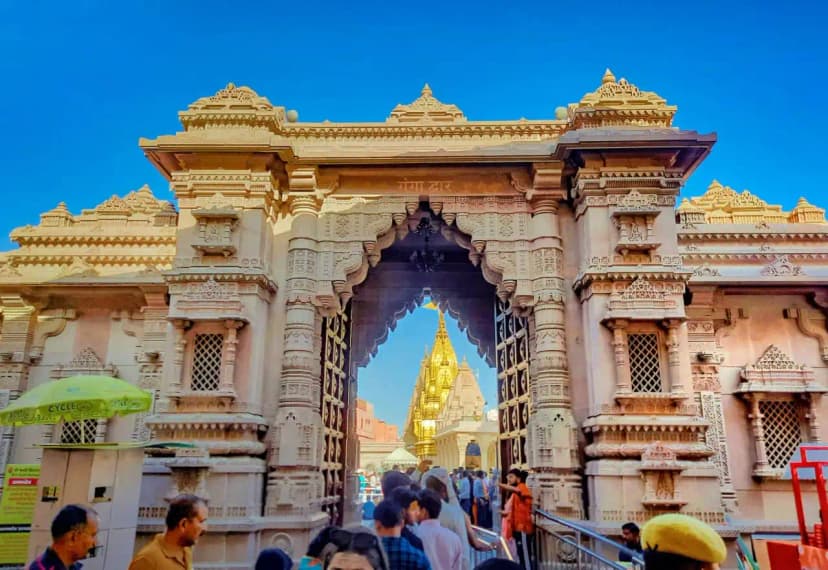
Kashi Vishwanath Corridor
The Kashi Vishwanath Corridor is a sweeping riverfront-to-temple promenade connecting the ancient Kashi Vishwanath Temple directly to the Ganga at Lalita Ghat. Inaugurated in 2021 and spanning nearly 50,000 square metres, it has transformed the pilgrim experience with wide sandstone walkways and views of the temple's golden spire. It houses the jyotirlinga of Lord Shiva, one of the twelve most sacred in India. For most visitors, it is the first and most essential stop in Kashi.
Significance
One of the twelve Jyotirlingas of Lord Shiva — the spiritual heart of the city.
Visiting Hours / Tips
Visit early morning (4–6 AM) for Mangala Aarti or evening for Shringar Aarti. Modest dress is expected; phones and leather items are typically restricted near the sanctum.
Directions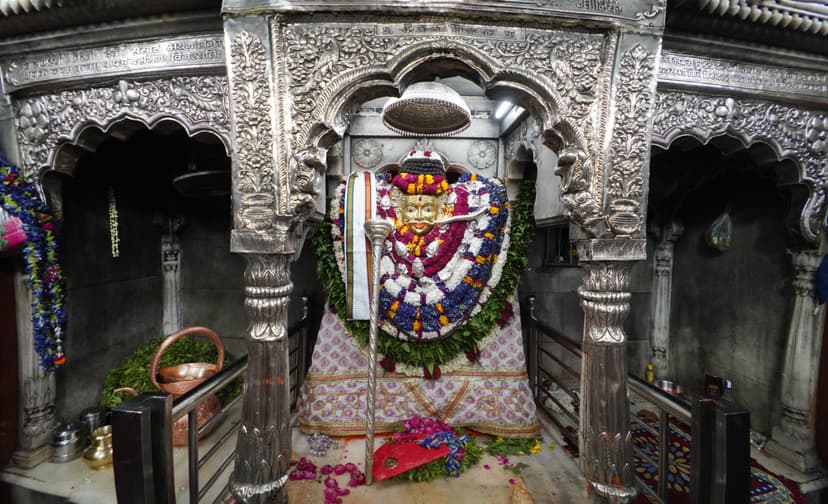
Baba Kal Bhairav Temple
Dedicated to Kal Bhairav, the fierce guardian deity considered the "kotwal" (chief protector) of Kashi, this temple holds that no pilgrimage to Varanasi is complete without his blessing. Local tradition holds that even Lord Shiva is approached here through Kal Bhairav's permission. The idol is adorned with a garland of black thread believed to guard against misfortune. It is one of the eight Ashta Bhairava shrines that ring the city.
Significance
Regarded as the guardian deity and protector of Kashi.
Visiting Hours / Tips
Considered especially auspicious on Sundays and Tuesdays; a short walk from Kashi Vishwanath.
Directions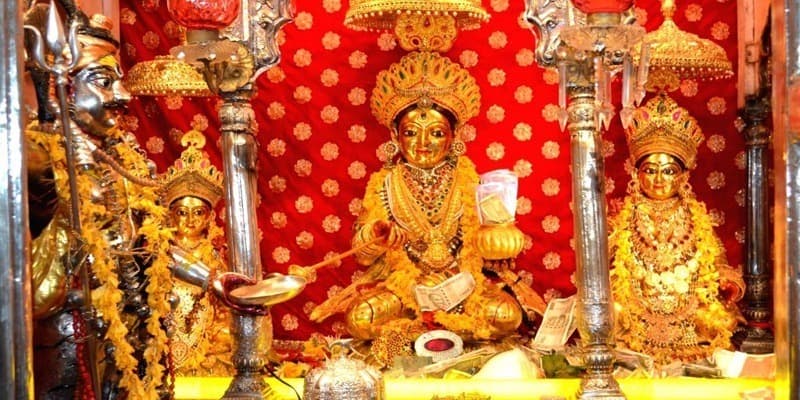
Mata Annapurna Temple
Sitting beside the Kashi Vishwanath Temple, this shrine honours Annapurna Devi, the goddess of nourishment and abundance, believed to ensure that no one in Kashi ever goes hungry. Free food distribution has long been a tradition here. The golden idol is displayed to the public for a few days each year during the Annapurna Mela. It remains one of the most visited shrines in the old city.
Significance
Goddess of food and nourishment, believed to sustain the entire city.
Visiting Hours / Tips
Easily combined with a Kashi Vishwanath visit, as the two sit almost adjacent to one another.
Directions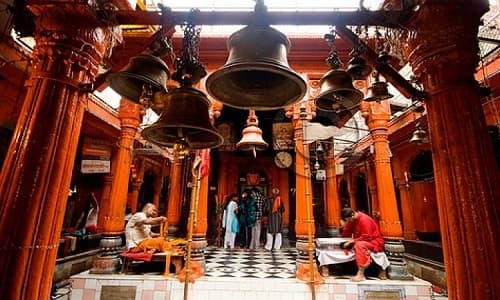
Ashta Bhairava Temples
The eight Bhairava shrines — fierce manifestations of Lord Shiva — are believed to guard the eight directions of Kashi, protecting pilgrims and residents alike. Visiting all eight in sequence is considered a powerful protective pilgrimage in its own right. Each shrine carries its own distinct character, from quiet neighbourhood temples to bustling devotional centres. Kal Bhairav is traditionally regarded as the chief among them.
Significance
Eight guardian forms of Shiva said to protect the city from every direction.
Visiting Hours / Tips
A full circuit can take the better part of a day; a local guide or auto-rickshaw makes the route far easier.
Directions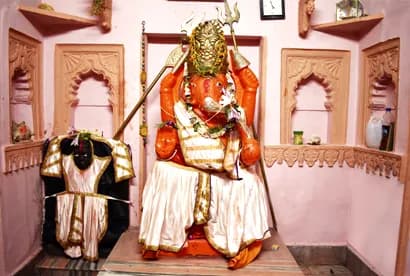
Ashta Vinayaka Temples
Eight shrines dedicated to Lord Ganesha are spread across Varanasi, each believed to remove a specific category of obstacle for devotees who visit them in sequence. Together they form a devotional circuit distinct from — but often combined with — the Ashta Bhairava route. The temples vary in scale, from modest wayside shrines to more elaborate structures woven into the city's old lanes.
Significance
Eight forms of Ganesha, remover of obstacles, protecting different aspects of a devotee's life.
Visiting Hours / Tips
Best attempted with a local guide, as several shrines sit within narrow residential lanes.
Directions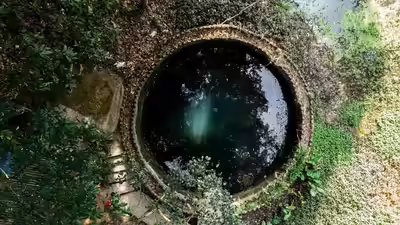
Mrityunjay Mahadev Temple and Holy Well
Home to a revered Shiva lingam associated with healing and protection from untimely death, this temple is closely tied to the Mahamrityunjaya mantra chanted for health and longevity. Adjoining it is a sacred well whose waters are believed to carry curative properties. Pilgrims dealing with illness, or seeking long life for family members, often make a dedicated visit here — a calmer, more contemplative stop than the city's larger temple complexes.
Significance
Associated with healing, protection and the Mahamrityunjaya mantra for longevity.
Visiting Hours / Tips
A quieter alternative to the main Vishwanath crowds; many visitors offer water from the holy well at the shrine.
DirectionsThe River
Ganga & Ghats Experience
The rhythm of the Ganga, from sunrise boats to the evening Aarti.
Ganga Boat Ride
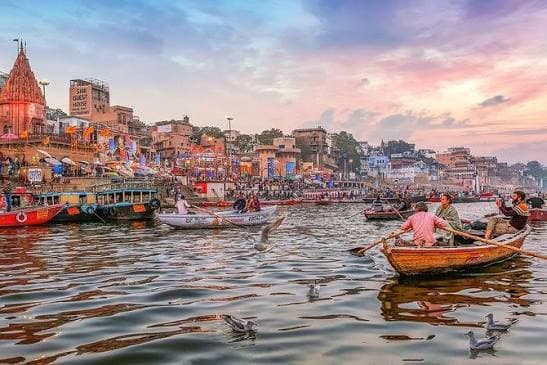
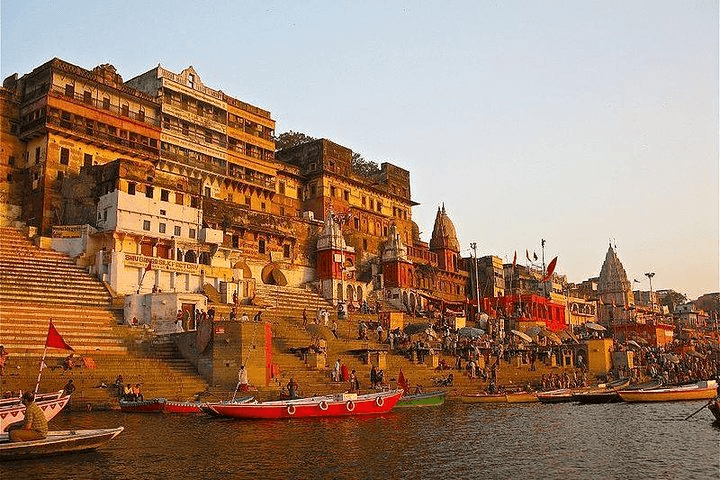
A sunrise or sunset boat ride along the Ganga remains the single most evocative way to experience Varanasi, gliding past dozens of ghats as temple bells, chants and the everyday rhythms of riverside life unfold along the banks. Wooden rowboats and small motorboats are readily available from most major ghats. The view of the sun rising behind the ghats, or the glow of the evening Aarti reflected on the water, is unlike anywhere else in India.
Significance
The most immersive way to witness the sacred geography of the ghats.
Visiting Hours / Tips
Book directly at the ghat or through your hotel and agree the fare beforehand. Sunrise trips (around 5:30–6:30 AM) offer the calmest water and softest light.
DirectionsDashashwamedh Ghat Ganga Aarti
Every evening as dusk settles over the river, a row of priests at Dashashwamedh Ghat performs the Ganga Aarti — a choreographed ritual of fire, bells, incense and chant offered to the river goddess Ganga. Multi-tiered brass lamps are swung in unison to the rhythm of hymns while thousands gather on the ghat steps and in boats on the water. Considered the most spectacular ritual in the city, it is performed daily without fail, lasting roughly 45 minutes to an hour after sunset.
Significance
A living, unbroken ritual tradition offered nightly to the sacred Ganga.
Visiting Tips
Arrive 45–60 minutes early to secure a good seat, or watch from a boat on the river for an unobstructed view. Evenings are crisp in December, so carry a shawl.
Get Directions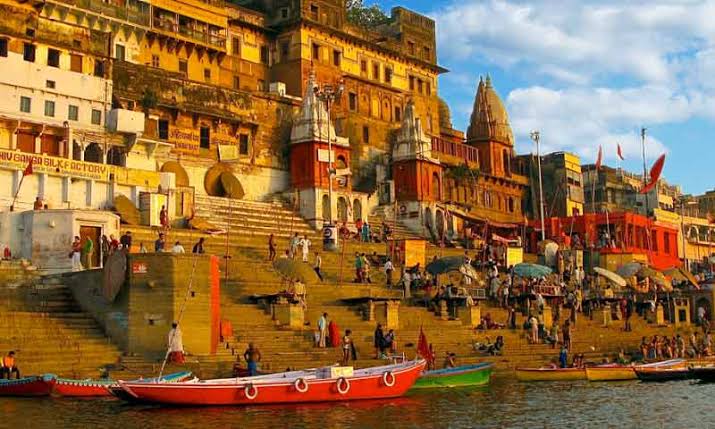
Assi Ghat
Located at the southern end of the ghat stretch, where the Assi stream historically met the Ganga, this ghat is known for its livelier, more contemporary atmosphere — a favourite among students, yoga practitioners and early-morning walkers. A smaller, community-led Ganga Aarti is held here each evening, offering a more intimate alternative to Dashashwamedh. It is also a popular starting point for sunrise boat rides, with surrounding lanes dotted with cafes and guesthouses.
Significance
A living, contemporary ghat blending tradition with the city's youthful, everyday rhythms.
Visiting Hours / Tips
Excellent for an early-morning walk or riverside yoga session; less crowded than Dashashwamedh for a quieter Aarti.
Directions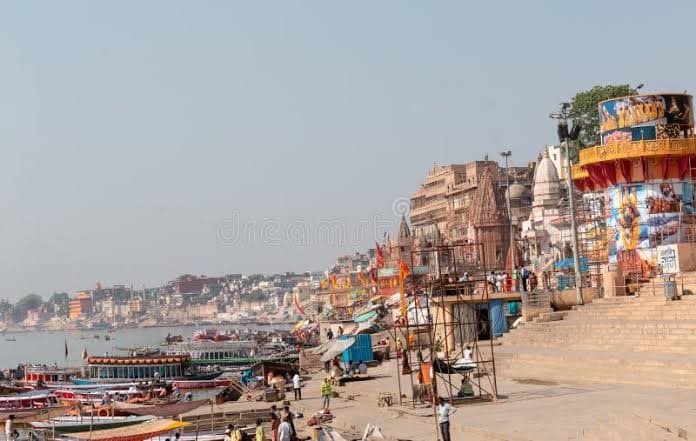
Panoramic Views of Historic Ghats
Varanasi's riverfront unfolds across nearly 84 ghats — an unbroken sweep of stone steps, temples, palaces and cremation grounds grown organically over centuries. Viewing this panorama, whether from a boat at dawn, a rooftop cafe, or a walk along the promenade, reveals the full scale of the city's relationship with the river. Manikarnika and Harishchandra, the principal cremation ghats, sit alongside temple ghats and former royal bathing places in one continuous, living tapestry.
Significance
A continuous, centuries-old riverfront capturing the full breadth of Varanasi's spiritual and civic life.
Visiting Hours / Tips
A slow boat ride covering the full stretch, or an early-morning walk along the promenade, gives the best sense of scale.
DirectionsLiving History
Historical & Cultural Heritage
Forts, temples and seats of learning that trace the city's layered past.
Ramnagar Fort
Standing on the eastern bank of the Ganga, opposite the main city, Ramnagar Fort has been the residence of the Kashi Naresh — the traditional royal family of Varanasi — since the 18th century. Built in a distinctive Mughal-influenced sandstone style, it houses a museum displaying vintage cars, royal palanquins, weaponry and an astronomical clock. The Kashi Naresh still holds ceremonial and symbolic importance in the city, particularly during the Ramnagar Ramlila.
Significance
Seat of the Kashi Naresh and a living link to the region's royal history.
Visiting Hours / Tips
Best reached by boat across the river or by road via the Ramnagar bridge; allow about an hour for the museum.
Directions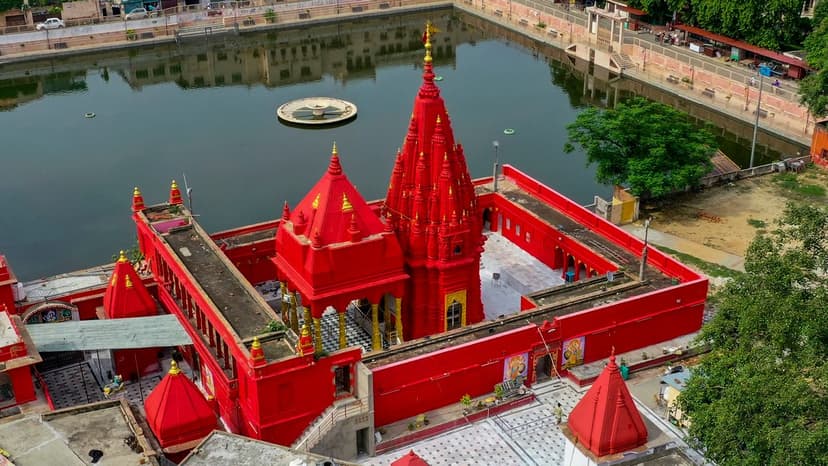
Ancient Durga Temple
Known locally as the "Monkey Temple" for its resident population of langurs, this 18th-century temple is built in the Nagara style and stained a deep red ochre associated with the goddess. It houses an image of Durga said to have manifested on its own rather than having been crafted by human hands. Adjoining the temple is the Durga Kund, a rectangular tank once fed directly by the Ganga, and the site remains an active centre of Shakti worship, especially during Navratri.
Significance
A significant Shakti shrine believed to house a self-manifested image of the goddess.
Visiting Hours / Tips
Keep belongings secure due to resident monkeys; the exterior can be admired and photographed even without entering the inner sanctum.
Directions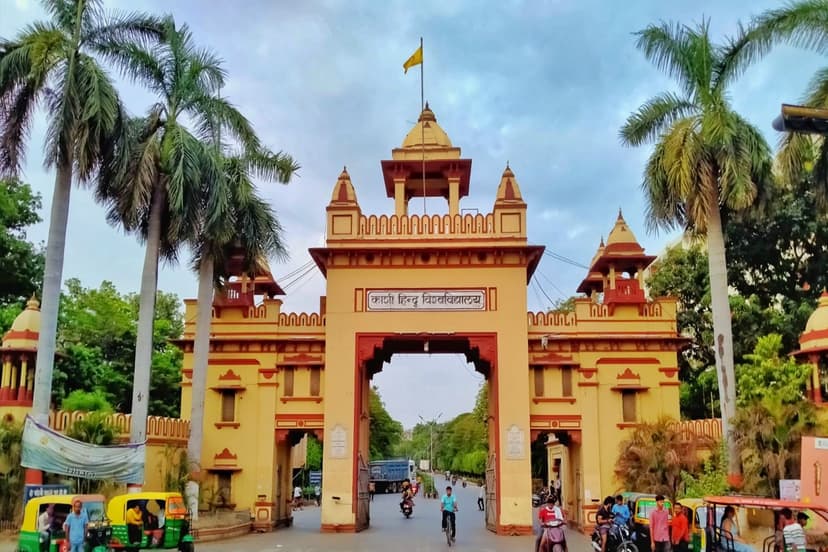
BHU Campus
Founded in 1916 by Pandit Madan Mohan Malaviya, Banaras Hindu University is one of Asia's largest residential universities and a heritage landmark in its own right. Its sprawling campus blends colonial-era architecture with the New Vishwanath Temple, the Bharat Kala Bhavan museum and the vast Central Library, all set within tree-lined avenues. As the very campus hosting NIMACON 2026, BHU offers delegates the rare chance to combine conference attendance with a walk through more than a century of academic heritage.
Significance
A century-old seat of learning and the host campus for NIMACON 2026 itself.
Visiting Hours / Tips
Set aside time before or after sessions to visit the New Vishwanath Temple and Bharat Kala Bhavan museum, both within walking distance of Shatabdi Auditorium.
Directions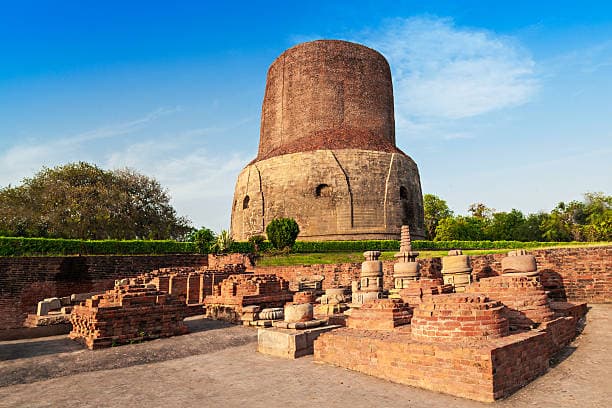
Sarnath
Just 10 kilometres from central Varanasi, Sarnath marks the spot where Gautama Buddha delivered his first sermon after attaining enlightenment, setting in motion what Buddhist tradition calls the Wheel of Dharma. The site preserves the Dhamek Stupa, the ruins of ancient monasteries and the Ashoka Pillar, whose lion capital was later adopted as India's national emblem. The Sarnath Archaeological Museum houses some of the finest surviving Mauryan and Gupta-era Buddhist art, and the site remains one of Buddhism's four most sacred pilgrimage places, drawing monks and visitors from across the world.
Significance
The site of Buddha's first sermon and one of Buddhism's four principal pilgrimage sites; birthplace of India's national emblem.
Visiting Hours / Tips
Visit the museum before the stupa grounds for historical context; allow at least two hours for the full site.
Directions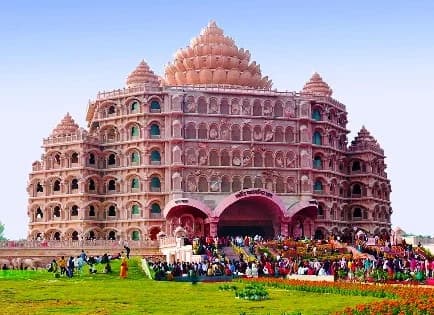
Swarved Mahamandir
One of the largest meditation halls in the world, Swarved Mahamandir near Varanasi is built entirely from pink sandstone in an intricate temple style, its walls inscribed with verses from the Swarved scripture composed by Sadguru Sadafaldeo Maharaj. The vast, pillar-free central hall is designed to seat thousands of meditators beneath an elaborately carved dome. Completed in recent years, it has quickly become both a spiritual centre and an architectural landmark for its sheer scale and craftsmanship.
Significance
A modern architectural marvel dedicated to meditation and the Swarved spiritual tradition.
Visiting Hours / Tips
Evenings offer the best light for photographing the illuminated dome; modest dress is appreciated as it remains an active spiritual site.
DirectionsFeatured Pilgrimage · ~65 km from Varanasi
Maa Vindhyavasini Dham
Roughly 65 kilometres from Varanasi lies Vindhyachal, home to one of India's most revered Shakti Peethas — sacred sites where, according to legend, a part of the goddess Sati fell to earth. The pilgrimage here is traditionally completed as a triangular circuit of three shrines: Maa Vindhyavasini, the presiding form of the goddess and the central shrine of the circuit; Maa Kali Khoh, a cave shrine dedicated to her fierce form; and Maa Ashtabhuja, the eight-armed form worshipped a short distance away. Together, the three shrines form one of the most complete Shakti pilgrimage circuits in North India, drawing devotees from across the country, especially during Navratri.
Plan Your Route
Interactive Attractions Map
Select any attraction to view it on the map and get directions from the venue.
Before You Go
Varanasi Travel Tips
A practical December guide for NIMACON 2026 delegates.
Weather
December in Varanasi is cool and pleasant — daytime highs around 20–23°C, cooler mornings and evenings near 8–12°C, with occasional mist near the river.
What to Wear
Layered clothing works best: a light jacket or shawl for mornings and evenings, modest attire for temple visits, and comfortable shoes for the ghats and narrow lanes.
Best Ghat Times
Visit at sunrise (around 6:00–7:30 AM) for calm ghats and boat rides, or just after sunset (around 5:30–6:30 PM) for the Ganga Aarti.
Banarasi Food to Try
Don't miss kachori-sabzi, Banarasi chaat, malaiyyo (a winter-only milk-foam dessert) and a Banarasi paan to finish.
Getting Around
Auto-rickshaws and e-rickshaws are the easiest way to get around; agree on a fare beforehand. Lanes near the ghats are walking-only.
Safety Tips
Keep valuables secure in crowded ghat areas, drink bottled or filtered water, and avoid wading into the Ganga. Prefer well-lit, populated ghats after dark.
Plan Your Trip
Combining Conference with Cultural Visit
A suggested four-day itinerary for delegates travelling to NIMACON 2026.
Day 1
Arrive & Settle In
- Arrive in Varanasi
- Check in to accommodation
- Evening Ganga Aarti at Dashashwamedh Ghat
Day 2
NIMACON 2026 — Day 1
- Full day of conference sessions
- Shatabdi Auditorium, BHU
Day 3
NIMACON 2026 — Day 2
- Full day of conference sessions
- Closing ceremony
Day 4
Explore & Depart
- Morning visit to Sarnath
- Afternoon visit to Ramnagar Fort
- Departure
← Swipe to explore →